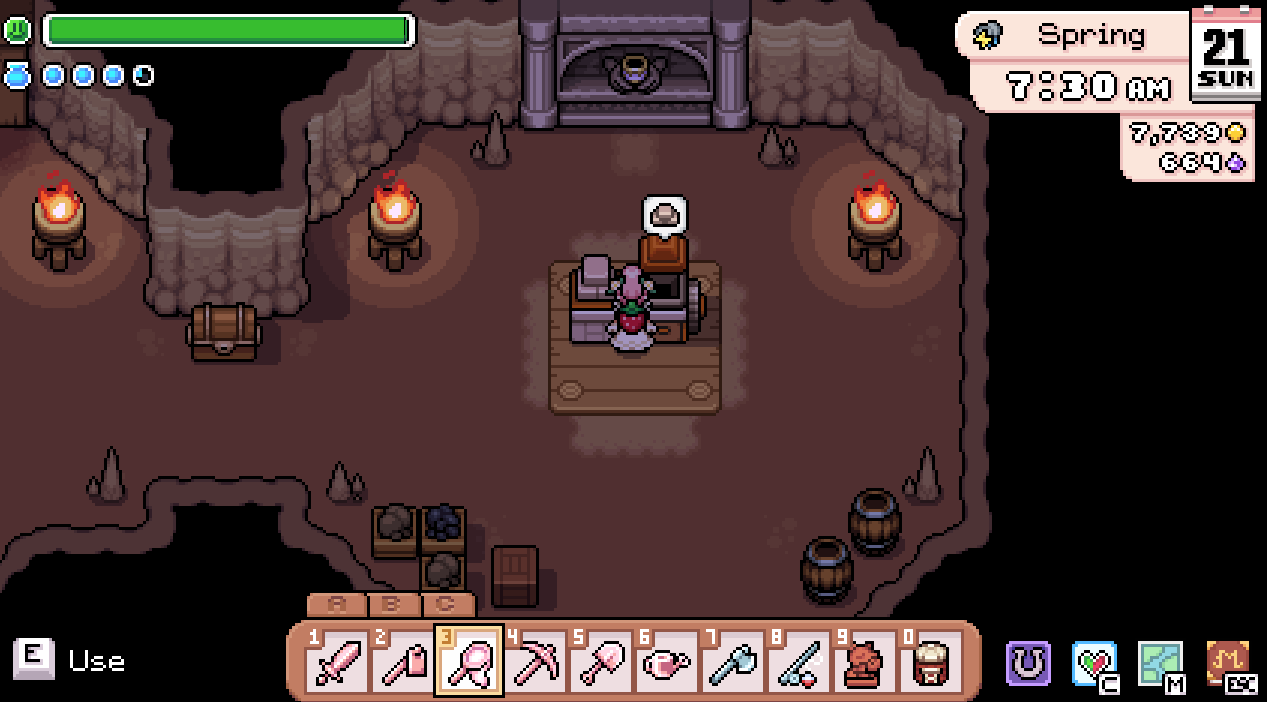
4 Best Farm and Life Sim Games Like Fields of Mistria
If you have been spending hours in Fields of Mistria, there is a good chance you are looking for other farming or life-simulation games like Fields of Mistria with the same satisfying combination of farming, exploration, relationships, crafting, quests, and progression. But what if you like Fields of Mistria while wanting something slightly different? Here are four more games for you to try out. This post compares them with Fields of Mistria across their core gameplay, economy, quests, combat, and early-, mid-, and late-game progression.
Table of Contents
- Stardew Valley: The Closest One in Games Like Fields of Mistria
- Grimshire: A Farm Sim Game Like Fields of Mistria With a Darker Survival Twist
- Winter Burrow: A Much More Survival-Focused Alternative
- Travellers Rest: For Players Who Want More Management
- How to Choose From This List of Games Like Fields of Mistria
Stardew Valley: The Closest One in Games Like Fields of Mistria
If you are exploring farm sim games like Fields of Mistria and simply want more of the same basic formula, start with Stardew Valley. And honestly, Stardew Valley is more complicated and will satisfy you with more playable hours.
You can imagine Stardew Valley is an expanded version of Fields of Mistria. The farm is larger, the map has more explorable locations, the main storyline takes longer to finish, and the farm production is more complicated with pickles, wine, cheese, and other produce.
Core Gameplay
Both games revolve around the familiar farming-sim daily loop:
Wake up → manage the farm → explore → gather resources → complete objectives → return home → repeat.
- Fields of Mistria puts considerable emphasis on rebuilding the town and progressing through its story and Town Rank system.
- Stardew Valley gives the player the choice to either progress through the Community Center or Joja Mart. But the player can also just focus on building up the farm and talking to the villagers, and they can still unlock most of the crafting items. That makes Stardew particularly good if you enjoy the freedom of Fields of Mistria but want fewer restrictions on what you do next.
Economy
The economy is also very familiar. The player grows or gathers things, sells them, and reinvests the money into seeds, buildings, tools, animals, equipment, and processing machines.
However, Stardew Valley’s economy eventually becomes much more focused on production chains. A crop doesn’t necessarily have to be sold immediately. The player can turn it into wine, jam, juice, and other processed products, creating increasingly valuable income streams. This gives the mid and late game a satisfying business-management element.
Fields of Mistria does not feature food processing yet, and the player has to resort to more ways of earning Tesserae, especially in the early game and mid game, such as town progression, quests, crafting, museum collections, and seed selling.
Quests and Progression
Stardew’s quest design is more open-ended than Mistria’s. The player will have requests from villagers, story objectives, Community Center bundles, relationship events, and various unlocks, but the game rarely tells the player exactly what they need to do every day.
This can be a positive or negative depending on what you enjoy. If you like Mistria because it constantly gives you a reason to explore another part of the world (such as the mines and the Deep Woods), Stardew may initially feel less directed. And for a new player in farm simulation, Stardew may make them feel overwhelmed due to the large amount of side quests and unknown areas for exploration.
Combat
Combat is more significant in Stardew than you might expect from a farming game.
The Mines provide a substantial alternative progression path, with increasingly dangerous enemies and valuable resources. Combat is also tied directly to mining progression because deeper areas contain better materials.
Compared with Mistria, Stardew’s combat is relatively harder, with more different types of enemies. On top of that, Stardew Valley also has a stricter penalty system. If the player does not return to bed before 2 AM, or if the player is killed in the mines, the player loses items in the bag and has to pay coins for recovery. For Mistria, there is no item loss or medical cost for the player to worry about. That penalty mechanism of Stardew adds another layer of difficulty to the combat.
Early, Mid, and Late Game
Stardew Valley features a more diverse story progression. It is fair to say that the progress in the game is not just linked to the main quest, but also to farm development.
- Early game: Learn farming, fishing, foraging, and mining while establishing a reliable source of income. (It is possible to earn a substantial amount of income through farming in Stardew’s early game. Mistria makes this comparatively more difficult.)
- Mid game: Start automating production, upgrading the farm, developing relationships, and exploring more dangerous areas.
- Late game: Optimization becomes increasingly important. The player can focus on highly profitable crops, artisan production, farm design, marriage, collections, and additional areas of the game.

Explore: Fields of Mistria Refined Stone: How to Get and Use the Stone Refinery
Grimshire: A Farm Sim Game Like Fields of Mistria With a Darker Survival Twist
If Stardew Valley feels too similar, Grimshire is probably the more interesting recommendation among games like Fields of Mistria.
Grimshire keeps the farming, fishing, foraging, mining, crafting, animals, villagers, and seasonal structure but puts them inside a much darker world. A plague threatens the village, and your farm isn’t simply a way of making yourself rich — it is part of keeping the community alive. That one change has a surprisingly large effect on the gameplay.
Core Gameplay
The biggest difference is that Grimshire turns farming into a resource-management problem.
In Fields of Mistria, you are largely building your own life while helping rebuild Mistria. In Grimshire, the wider community is much more directly dependent on what you produce.
You need to maintain food supplies, preserve resources, support village projects, and prepare for future shortages and the increasing demands from the Crown and royal army. The Root Cellar is particularly important because food can be preserved through systems such as drying, pickling, and smoking.
This changes the way the player views production and resources. Instead of aiming to earn more coins, the goal of farm expansion and resource gathering becomes making more contributions to the Root Cellar, meeting the Crown’s demands in time, and keeping the villagers from dying of hunger.
Economy
This is one of the biggest differences between the two games. Grimshire’s economy is surprisingly straightforward once you understand what different resources are actually for.
- Food (both for carnivores and herbivores) is the most important “currency”, as this is the only resource to keep villagers alive and help the player finish the main storyline.
- Coins are obtained by selling items to stores, while mining can become an extremely useful source of income because valuable gems and other materials can be sold.
This makes Grimshire feel different from the traditional farming-sim economy. Your farm is primarily a survival and community-support system, while money only performs a secondary role.
Quests and NPCs
This is arguably where Grimshire is most different from Fields of Mistria.
The villagers aren’t simply there to provide dialogue and individual requests. The community itself is part of the progression system. You can construct village projects, donate specimens for research, and unlock improvements intended to increase the settlement’s chances of survival.
While Fields of Mistria provides community support through shared stations (shared kitchen, forge, and crafting station), Grimshire supports the player via the villagers. Whenever there is a project, other villagers will donate resources as well, including donating to the Root Cellar food rations.
The trade-off is that Grimshire’s main story is comparatively straightforward, which is only finishing the increasing food rations for now. And there are no individual NPC questlines yet. If you play Fields of Mistria primarily for its characters, romance, and long-running town storyline, Mistria has the stronger narrative focus.
Combat
As of now, Grimshire does not feature any combat yet. There is no monster in the mines either. This is a good choice if you enjoy the resource-management side of Mistria more than its fighting mechanics. The only risk is that the mines in Grimshire may collapse if the player digs into the unsteady walls.
Early, Mid, and Late Game
The progression in Grimshire is faster than Fields of Mistria. While in Fields of Mistria, the player needs to progress down the mines (one of the main storylines) and level up the Town Rank to unlock automation, marriage, and other useful mechanisms, Grimshire basically allows the player to build up automation, ranching, food processing, and others at early and mid-game phases.
- Early game: Establish food production, explore the village, gather resources, and learn how to keep the community supplied.
- Mid game: Preservation, animals, mining, village projects, and research donations become increasingly important for unlocking new items.
- Late game: The player’s focus shifts toward maintaining a stable resource network and expanding the farm for the increasingly demanding needs of the community.

Explore: Grimshire Guide for Beginners: How to Get Your Farm Ready in Week 1
Winter Burrow: A Much More Survival-Focused Alternative
Winter Burrow is perhaps the biggest mechanical departure from this list of games like Fields of Mistria
The player still gathers resources, crafts, cooks, explores, meets characters, improves their home, and progresses through a story. But instead of worrying primarily about stamina and making money, you have to think about how to survive as an individual with more survival metrics.
You play as a mouse returning to a ruined childhood burrow, with the goal of restoring it while exploring a dangerous frozen wilderness.
Core Gameplay
The most important addition is warmth. Winter Burrow has multiple survival statistics, including health, hunger, warmth, and energy. The main pressure comes from warmth. Warmth decreases while the player is outside in the cold, and becoming too cold can eventually damage health.
This completely changes exploration.
- In Fields of Mistria, the player can continue their exploration so long as it is not 2 AM yet and there is still stamina.
- In Winter Burrow, the player has to think ahead and camp from time to time to recover warmth. Nighttime is simply not an ideal time for exploration because it will be too cold. That makes the game more stressful than Mistria despite its cute visual style.
Economy
Money does not exist in Winter Burrow. All the resources gathered are for the player to make food, clothing, items, and furniture.
- Food keeps the player alive and gives the player buffs.
- Clothing can protect the player against the cold and increase the duration that the player can stay outside and explore.
- Materials are for crafting tools and items. With better tools, the player can explore more blocked areas and complete the quests in the world.
The result is an economy based more heavily on resource conservation and preparation.
Quests and Exploration
Winter Burrow’s story is built around exploration and restoring your home while uncovering what happened to the mouse’s missing aunt and helping out other animals.
Quests given by other characters provide reasons to venture into different areas, discover new resources, craft new furniture set and tools, and develop the world around your burrow. The quests therefore feel less like traditional farming-sim requests and more like survival-adventure objectives.
Combat
Winter Burrow does have hostile creatures, including insects such as beetles, ants, and spiders. Health can be lost through combat, hunger, or allowing warmth to completely disappear. On the other hand, the combat is not very difficult, and the real challenge is managing your character’s condition while exploring.
If you are not a fan of combat, Winter Burrow may not be the game for you. While the player only needs to deal with monsters in the mines in Fields of Mistria (and with better protection, the player can even ignore their attacks), Winter Burrow has hostile creatures basically everywhere in the map.
Early, Mid, and Late Game
Winter Burrow’s main story quest does not take too much time to finish (definitely shorter than the Fields of Mistria main questlines). There is no clear early, mid, and late game progression yet. The main rewards of completing other animals’ quests are new decorations and furniture sets. From this perspective, Winter Burrow does give the player more relaxation in progression and more time to create their own cozy home.
- Early game: Stay close to home, gather basic materials, make food, and improve your warmth protection.
- Mid game: Better clothing, crafting, and exploration allow you to travel further from your burrow.
- Late game: You have much greater freedom to explore, improve your home, and complete the remaining story objectives.

Explore: Winter Burrow Aunty: How to Find and Rescue Aunty
Travellers Rest: For Players Who Want More Management
Travellers Rest is the odd one out on this list of games like Fields of Mistria. It has farming, cooking, crafting, exploration, characters, and progression, but its central gameplay isn’t really farming. It is about running a tavern.
The player takes over a fantasy tavern and gradually turns it into a successful business by brewing drinks, cooking food, managing customers, and expanding the building. At the same time, the player can also work on ranching, farming, and exploring a world that has magic (in the latest update). This game has much potential to offer more playability compared to other games like Fields of Mistria.
Core Gameplay
The basic loop is:
Gather, farm, forage, fish, take care of animals → craft → stock the tavern → open → serve customers → earn money → expand.
This design has also given the player a purpose when working on mining, fishing, and farming, because this resource gathering can help the player lower the cost and improve the tavern revenue.
As the player starts to hire staff and builds up production, the player can also take more time to explore the world and finish quests. So the game does not limit the player to management only.
Economy
This is where Travellers Rest really shines. The player’s money isn’t simply used to upgrade a personal farm. It goes back into the business itself. The player earns money from customers and reinvests it into better equipment, recipes, furniture, decorations, expansion, and other improvements.
Moreover, money is not everything. In many cases, the player can either buy something directly or gather resources to make them themselves, so there are other choices even when the tavern is not churning enough money. Magic and arcane cooking cost magic shards, which can be easily earned by slaying monsters in the mines.
The game also has tavern reputation and skill trees, giving your business several different progression paths.
And compared with Fields of Mistria, Travellers Rest feels much more relaxed mechanically because the focus is on management rather than surviving a limited daily stamina/health economy.
Quests and Progression
Travellers Rest has quests and a storyline, but they aren’t the primary reason to keep playing. The player can just run the tavern and focus on other things and find it is fine without progressing quests.
The real progression comes from improving your tavern. New recipes, technology, furniture, rooms, and production options gradually expand what you can do. This makes it more relaxing in one important respect: there is less pressure to constantly follow a long storyline.
Combat
Combat is not the core of Travellers Rest, and it is definitely the most relaxing combat you’ve ever seen. For now, the only weapon the player can use is a mop. Monsters and wild animals do not fight back, and all they can do is flee. There is no health, stamina, or other metrics that may kill the player in the game.
All of these make Travellers Rest a great choice if you enjoy some challenges in obtaining resources, but not too much stress on combat.
Early, Mid, and Late Game
Travellers Rest is still in development and in early access. Its main progression focuses on improving the tavern’s level.
- Early game: Learn to run the tavern, make basic drinks and food, and establish your first reliable income.
- Mid game: Expand your menu, production systems, decorations, staff and tavern layout. Work on farming, ranching, and fishing to produce resources. Complete quests to get rewards.
- Late game: Run the tavern effectively without spending too much time on it. Have more time to explore the world, the magic updates, and decorate the tavern to your liking.

Explore: Fields of Mistria Caldarus Guide: Romance, Gifts, Marriage, and Children
How to Choose From This List of Games Like Fields of Mistria
- If you want the closest overall experience, play Stardew Valley. It shares almost all of the fundamental systems that make Fields of Mistria enjoyable, while giving you a more open-ended progression structure.
- If you want Fields of Mistria with a darker survival twist and easier money-earning and farm-building, go for Grimshire. While it takes 100 hours in Fields of Mistria to set up the farm, Grimshire requires only half of that timeframe.
- If you want something more stressful and survival-oriented, choose Winter Burrow. The warmth system adds an extra layer of planning that Mistria doesn’t have. A simple trip outside becomes a calculation involving food, clothing, energy, distance, and whether you can get home before the cold catches up with you.
- Finally, if you love crafting and economy but want something more relaxing, try Travellers Rest. Instead of building a farm into a profitable agricultural operation, you are turning a tiny tavern into a successful business. On top of that, you can still enjoy a mature farming, ranching, fishing, and foraging system.
This table measures how important/developed each gameplay element is within the game:
| Game | Farming | Survival | Economy | Quests/Story | Combat | Management |
|---|---|---|---|---|---|---|
| Fields of Mistria | ⭐⭐⭐⭐⭐ | ⭐⭐ | ⭐⭐⭐⭐ | ⭐⭐⭐ | ⭐⭐⭐ | ⭐⭐⭐ |
| Stardew Valley | ⭐⭐⭐⭐⭐ | ⭐⭐⭐ | ⭐⭐⭐⭐⭐ | ⭐⭐⭐⭐ | ⭐⭐⭐⭐⭐ | ⭐⭐⭐⭐ |
| Grimshire | ⭐⭐⭐⭐⭐ | ⭐⭐⭐⭐⭐ | ⭐⭐⭐⭐ | ⭐⭐ | ⭐ | ⭐⭐⭐⭐⭐ |
| Winter Burrow | ⭐⭐ | ⭐⭐⭐⭐⭐ | ⭐⭐⭐ | ⭐⭐⭐⭐ | ⭐⭐⭐ | ⭐ |
| Travellers Rest | ⭐⭐⭐ | ⭐ | ⭐⭐⭐⭐⭐ | ⭐⭐ | ⭐ | ⭐⭐⭐⭐⭐ |
💐Whether you’re just starting your farm or chasing 100% completion, our Fields of Mistria Guide Hub is your home for walkthroughs, farming advice, fishing guides, romance tips, crafting tutorials, and much more. New guides are added regularly, so be sure to check back as your adventure continues. Like you, we’re fans of farming sims!

Fields of Mistria Tips: 7 Things to Know Before Getting Too Far
Make tens of thousands of Tesserae a day and progress to the end game in Fields of Mistria with these…

4 Best Farm and Life Sim Games Like Fields of Mistria
Tired of Fields of Mistria? Try these four games, each offering its own unique twist on farming, survival, management, and…

Fields of Mistria Refined Stone: How to Get and Use the Stone Refinery
Make the most of the Stone Refinery by turning your excess stone into valuable materials for crafting and farm automation….


Fields of Mistria: When & How to Get More Inventory Space
The solution on how to bring more “junks” home…

Fields of Mistria Dating Guide: How to Date, Unlock Dates, and Raise Relationships
Before deciding to whom you want to marry……